Meet-up Link: https://www.meetup.com/astronomy-131/events/316803557/
Date: Thursday, October 8, 7:30 PM
Location: SFU Burnaby, room AQ3149
Topic: The Roman Space Telescope and the Golden Age of Astronomy
Speaker: Dr. Wes Fraser
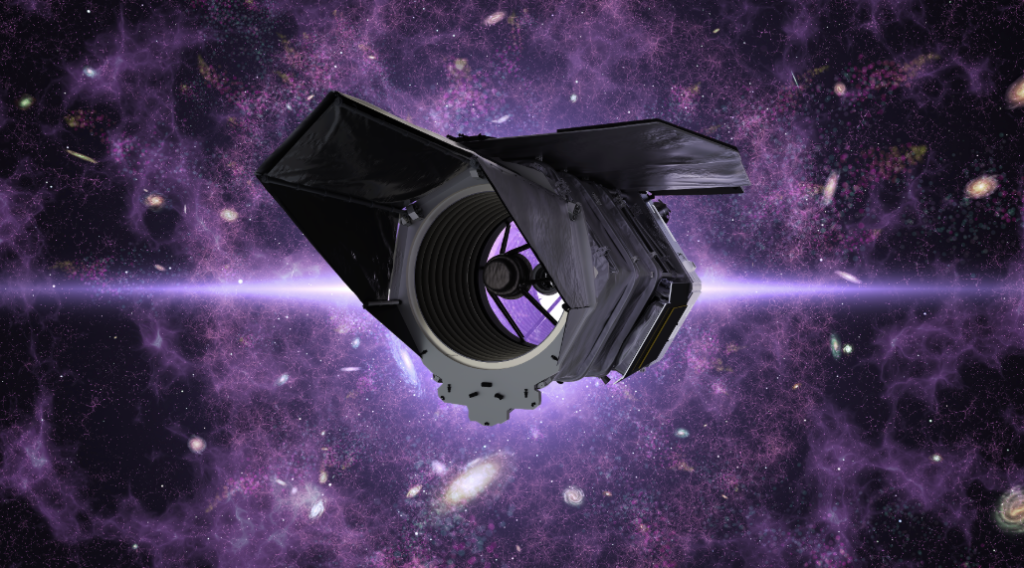
Abstract: Celebrate! Roman didn’t blow up the launch pad! Built from spare spy parts and using technology that allows it to operate at the L2 Lagrange Point, the start of Roman observing will mark a key moment in astronomy, opening up imaging with Hubble-like resolution, but a very wide field of view like with ground-based imagers. Roman is going to revolutionize many fields of astrophysics, from cosmology, to stellar physics, and Solar System science. In this talk I will touch on important aspects of these topics, and the features of Roman that make those improvements possible. But Roman isn’t the only game out there, with the James Webb Space Telescope, the Next Generation Very Large Array, the Square Kilometer Array, and now PRIMA keeping Roman company (just to name a few new facilities). In fact we are witnessing what I call the start of the Golden Age of astronomy. I will put Roman in context of these other facilities and show how they are complementary, and will work together to be greater than the sum of their parts.
Bio: Wes Fraser is a Senior Research Officer at the Herzberg Astronomy and Astrophysics Research Centre in Victoria, BC, and an adjunct professor in Physics & Astronomy at the University of Victoria. Having earned his PhD in 2008, he has spent his entire career understanding the properties of icy planetesimals in the Solar System, such as Kuiper Belt Objects, to try and piece together the planetesimal formation process. He has been very lucky to garner extensive experience using many of the world’s premier top observatories, including Keck, Gemini, Hubble, James Webb, and soon the Roman Space Telescope. He’s an avid competitor of ultimate frisbee, and happens to own a coffee company, because one full time job wasn’t enough.